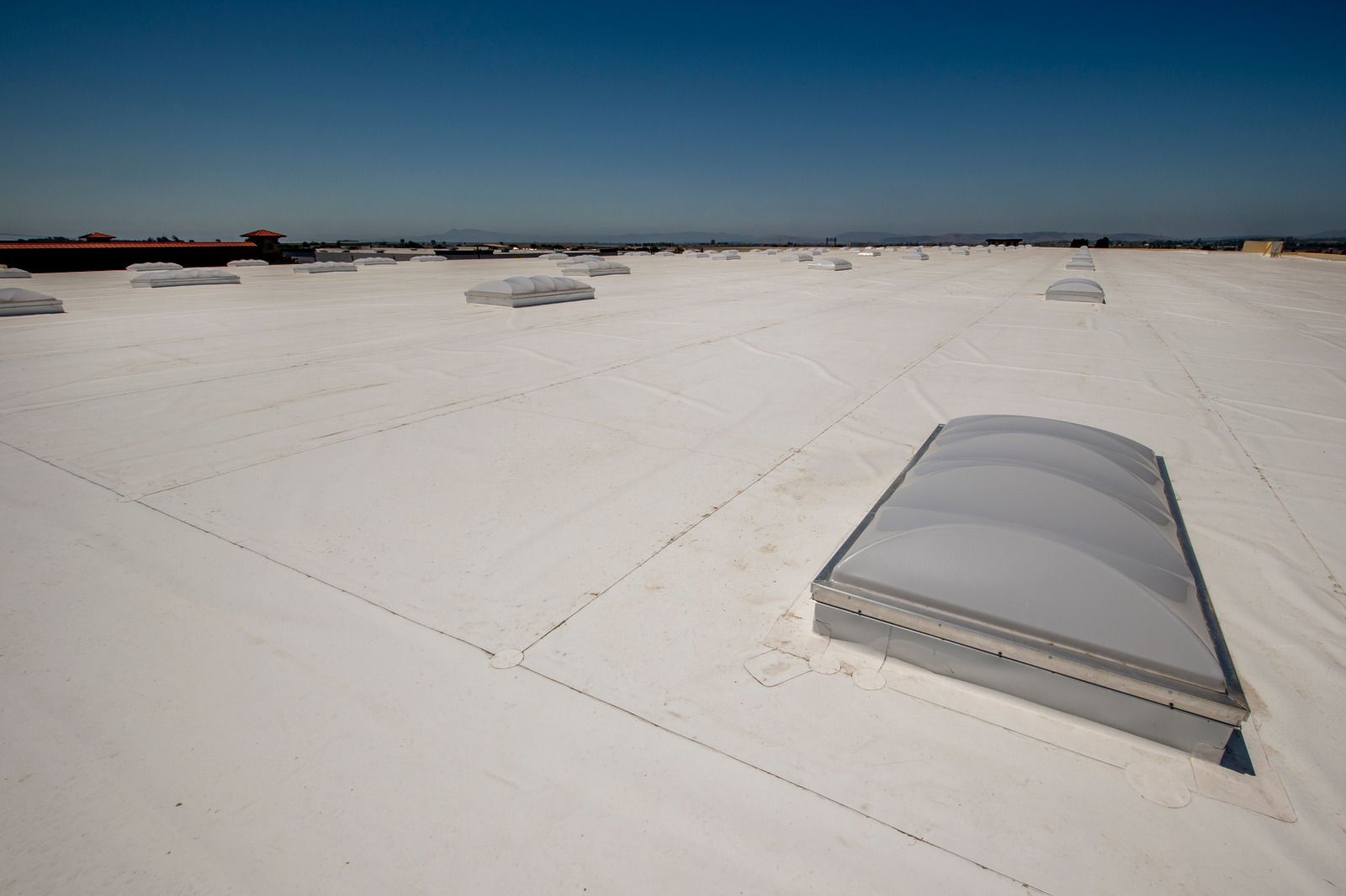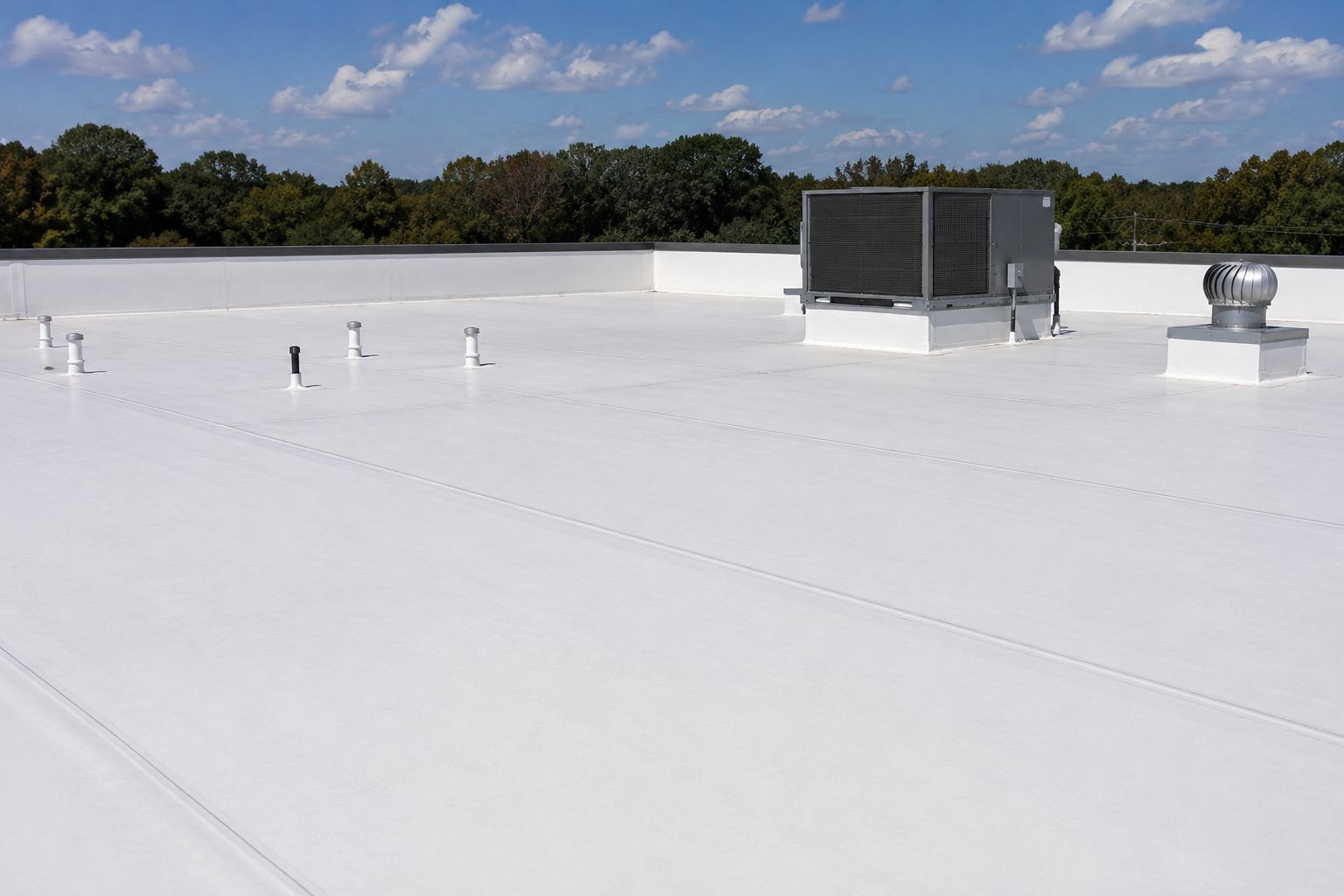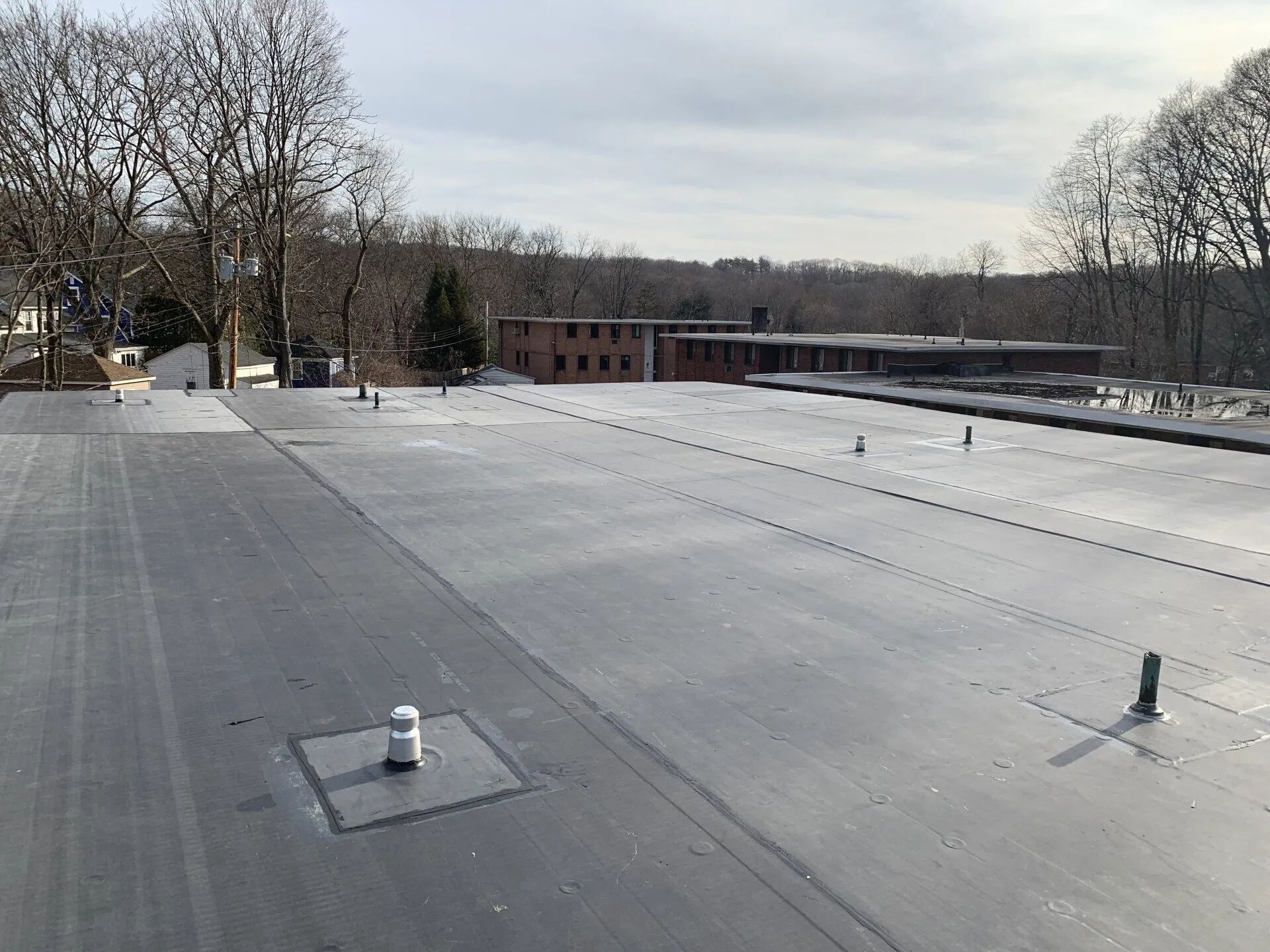
Water Ponding on Your Flat Roof Days After Rain? Why Drainage Fails
Quick Answer: Water ponding on a flat roof days after rain means the roof isn't draining the way it should, and standing water that lasts beyond about 48 hours is a recognized threat to the roof membrane. The usual causes are inadequate slope, clogged or too-few drains, low spots where the deck has deflected, and debris blocking flow. Ponding accelerates membrane breakdown, adds structural weight, and leads to leaks. The fix depends on the cause, from clearing drains to adding drainage or correcting low spots, but it shouldn't be ignored.
You own or manage the building, it rained a few days ago, the sky has been clear since, and yet there are still wide puddles sitting on the flat roof. They are not drying, they are not draining, they are just sitting there, sometimes deep enough to reflect the sky like a pond. It is one of the most common flat-roof complaints, and it is easy to shrug off as harmless rainwater. It is not harmless.
Standing water is one of the hardest things on a low-slope commercial roof. A widely referenced industry guideline holds that water remaining on a roof beyond roughly 48 hours, after rain has stopped and in drying conditions, is ponding that threatens the membrane and the roof's longevity. So water still sitting days later is a signal that the drainage has failed somewhere, and that the roof is being worked on by that water the entire time it sits. In the New England climate, where that water can also freeze and thaw, the stakes are higher. Here is why drainage fails and why ponding deserves attention.
What Counts as Ponding (and Why 48 Hours Matters)
Not every puddle after a storm is a problem. The distinction is time.
A flat roof is never perfectly flat; it is designed with a slight slope so that rainwater moves toward drains, scuppers, or gutters and leaves the roof. Right after a heavy rain, some water naturally sits briefly before it drains, and that is normal. The problem is water that stays. The commonly cited standard is that water still standing after about 48 hours in conditions that should allow drying indicates ponding, water the roof is failing to shed. That timeframe matters because it separates ordinary drainage from a roof that cannot clear its own water.
Why is lingering water such a concern? Because a roof membrane is built to shed water, not to be submerged in it continuously. Constant immersion is a fundamentally different and harsher condition than the wet-then-dry cycle the roof is designed for, and it works against the membrane day and night for as long as the water sits.
Why Drainage Fails on a Flat Roof
When water ponds well after the rain, one or more drainage problems are at work. Identifying which is the first step to fixing it.
Inadequate slope
Low-slope roofs rely on a gentle pitch to move water to the drains. If the slope was insufficient from the start, or never built in correctly, water has no reason to move and simply sits in the flatter areas. This is one of the most common underlying causes.
Clogged drains and scuppers
Leaves, dirt, debris, and roof granules collect at drains and scuppers and block them. A roof with perfectly good slope will still pond if the water reaches a drain that is choked with debris and cannot accept it. This is also the most preventable cause, through regular clearing.
Too few or poorly placed drains
Some roofs simply do not have enough drainage capacity, or the drains are not located at the true low points, so water collects in areas with nowhere to go.
Deck deflection and low spots
Over time, the roof deck and structure can sag slightly between supports, or under the weight of equipment, creating shallow basins. Water finds these low spots and pools there. Ponding itself can worsen this, because the weight of standing water adds load that deepens the deflection, which then holds even more water, a self-feeding cycle.
Insulation or material settling
On some systems, the insulation board beneath the membrane compresses or shifts unevenly, creating dips that trap water.
The common outcome is the same: water arrives faster than the roof can move it off, and the low areas hold it long after the storm.
Tip: Note exactly where the water sits and photograph it from the same spot after each rain. Ponding that always returns to the same locations points to a fixed cause, like a low spot or a poorly placed drain, while ponding that shifts or worsens over time can indicate deck deflection or settling that's progressing. That record of where and how the water collects gives a roofer a major head start on diagnosing the cause.
What Ponding Does to the Roof
Lingering water is not just a cosmetic issue. It attacks the roof in several ways at once.
It degrades the membrane
Constant immersion breaks down many roofing materials over time, accelerating aging in exactly the spots that stay wet. UV exposure on a water-saturated membrane is especially hard on it, and the ponded areas tend to be the first to fail.
It adds structural weight
Water is heavy. A broad, deep pond adds significant load to the roof structure, and as noted, that weight can deepen the very low spots holding the water, compounding the problem and, in extreme cases, raising real structural concerns.
It finds the weak points and leaks
Standing water sits on seams, penetrations, and any small flaw with relentless patience. Where a brief wetting would do nothing, days of immersion drives water through tiny imperfections that would otherwise never leak, which is why ponding so often precedes interior leaks.
It grows algae and holds debris
Ponded areas collect dirt and grow algae and vegetation, which holds even more moisture against the membrane and can further clog drainage.
Freeze-thaw makes it worse
In a New England winter, ponded water freezes and expands, then thaws, repeatedly. That cycle stresses the membrane and can pry at seams and flashing, accelerating damage in the cold months.
Each of these shortens the roof's life, and they tend to compound, which is why ponding that is left alone rarely stays a minor issue.
Warning: Don't attempt to drill new drainage holes, chip channels, or cut into a flat roof to "let the water out." Cutting into the membrane or deck without knowing the roof's construction creates new leak points and can compromise the system and even the structure. Drainage corrections on a commercial roof need to be designed and installed properly. Clearing debris from existing drains is reasonable upkeep; altering the roof itself is not a DIY fix.
How Ponding Gets Resolved
Because ponding has several possible causes, the fix starts with figuring out which one you have, then matching the solution to it.
Clear and maintain the drains first
If clogged drains or scuppers are the issue, clearing them and keeping them clear may resolve the ponding on its own. Regular drain maintenance is the simplest and most cost-effective step, and it is where any assessment starts.
Add or relocate drainage
Where there are too few drains or they sit in the wrong places, adding drains or scuppers at the true low points gives the water a way off the roof.
Correct the slope and low spots
For roofs with inadequate slope or settled low spots, tapered insulation or built-up crickets can be installed to create positive drainage that directs water toward the drains. This addresses the root cause on roofs that simply do not shed water.
Address the deck or structural issues
If deflection is involved, the structural side has to be evaluated so the roof is not just resurfaced over a sagging deck that will pond again.
Repair the damage the ponding caused
Areas where the membrane has already degraded from sitting water are repaired or replaced as part of restoring the roof.
A professional assessment ties these together: identify why the water is not leaving, fix that, and repair what the standing water has already harmed. That sequence is what stops the cycle rather than just bailing out the symptom.
Frequently Asked Questions
Is some standing water on a flat roof normal after rain?
A little brief pooling right after heavy rain is normal as water makes its way to the drains. The problem is water that stays. The commonly used benchmark is that water still standing after about 48 hours, in conditions that should allow it to dry, is ponding that threatens the membrane and needs attention.
Why does water pond days after it stopped raining?
Because the roof isn't draining the water away. The usual reasons are inadequate slope, clogged or too-few drains, or low spots from deck deflection or settled insulation where water collects with nowhere to go. Days-later ponding always points to a drainage failure somewhere on the roof.
What harm does ponding water actually do?
Constant immersion degrades the membrane and accelerates aging in the wet spots, adds heavy structural load that can deepen low areas, drives water through seams and flaws to cause leaks, and grows algae that holds more moisture. In winter, freeze-thaw cycling adds further stress. The effects compound over time.
Can I just clear the drains myself?
Clearing leaves and debris from existing drains and scuppers is reasonable, ongoing maintenance and may resolve ponding caused by clogs. What you shouldn't do is cut new holes or channels into the roof, which creates leaks and can compromise the system. Anything beyond clearing debris should be assessed by a roofer.
Does ponding mean I need a whole new roof?
Not necessarily. Many ponding problems are resolved by clearing or adding drainage, or by adding tapered insulation to correct slope, plus repairing the spots the water has damaged. Whether it's a targeted fix or something larger depends on the cause and how much harm the standing water has already done.
Why is ponding worse in New England?
Beyond the membrane wear that ponding causes everywhere, standing water here freezes and thaws repeatedly through winter. That expansion and contraction stresses the membrane, seams, and flashing, accelerating damage during the cold months, so ponding that might be slow to cause problems elsewhere does so faster in this climate.
Getting Water Off the Roof Where It Belongs
Water still sitting on your flat roof days after the rain is the roof telling you its drainage has failed, and every day that water sits, it is wearing on the membrane, loading the structure, and looking for a way in. The 48-hour benchmark exists for a reason: past that, you are no longer looking at rainwater, you are looking at ponding that shortens the roof's life. The cause might be as simple as a clogged drain or as involved as a low spot in the deck, but it is knowable and fixable, and addressing it early is far easier than dealing with the leaks and damage that ponding eventually brings.
Get standing water off your roof before it costs you the membrane — Water that lingers past 48 hours is actively degrading your roof, adding weight, and working toward a leak, and in New England it freezes and thaws on top of all that. With 30
years of experience serving West Haven, CT, Pinnacle Roofing
provides
expert flat roof repair, assessing why your commercial flat roof isn't draining, from clogged drains to slope and deck issues, and correcting the cause while repairing what the ponding has harmed. Reach out to schedule a flat-roof drainage assessment and protect the building under it.